Sunday, October 11, 2026

ICRC president underscores role of international humanitarian law as foundation for global peace and stability in Audience with Pope Leo XIV at the Vatican and President Mattarella in Rome


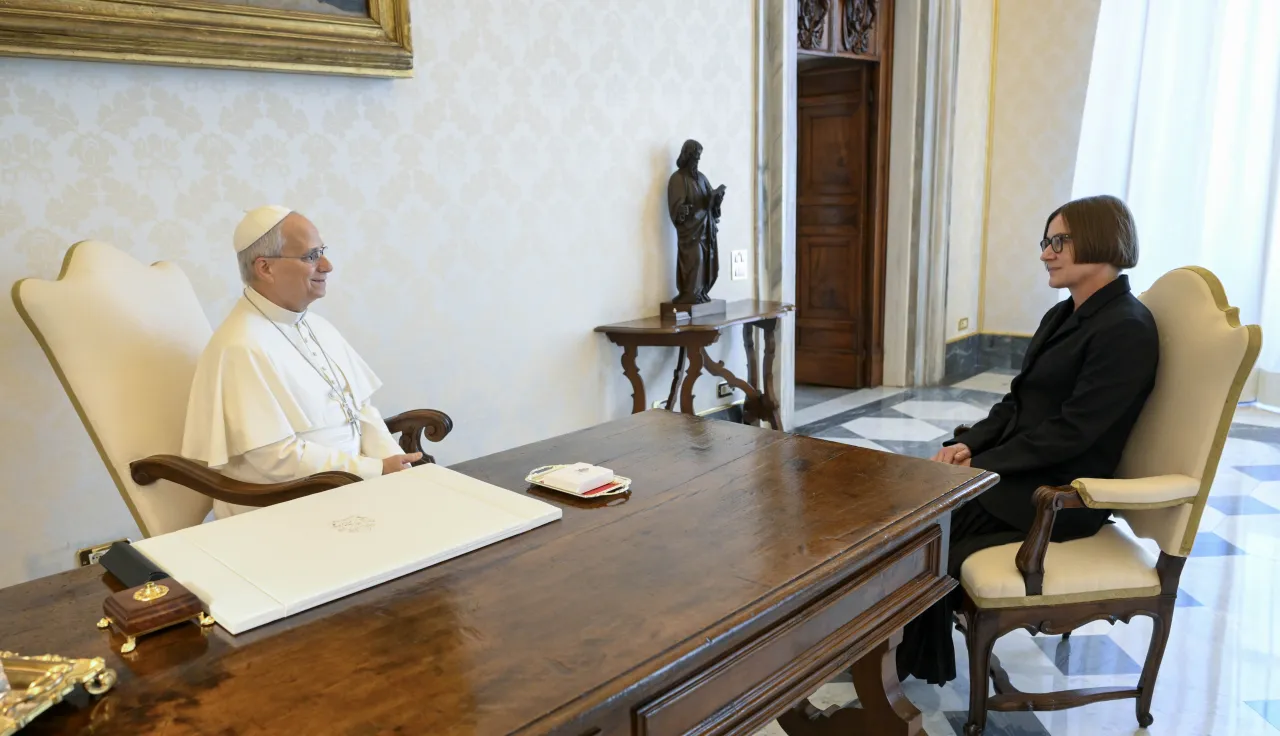
Pope Leo XIV and ICRC president Mirjana Spoljaric
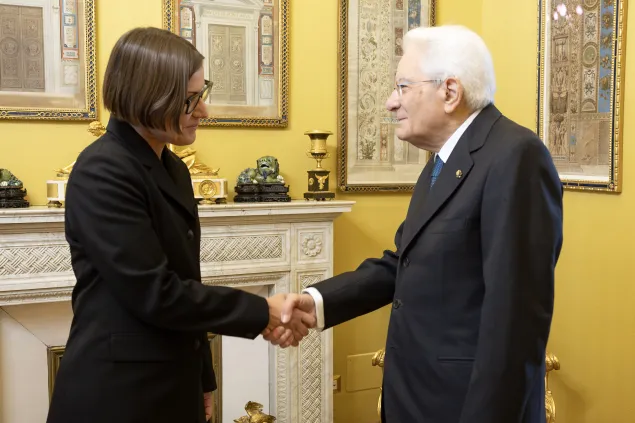
Rome (ICRC) - With armed conflicts at their highest level since World War II, Mirjana Spoljaric, president of the International Committee of the Red Cross (ICRC), today focused on the role of international humanitarian law for global peace and stability during an Audience with His Holiness Pope Leo XIV and a separate meeting with Italian President Sergio Mattarella.


 By Jun Enriquez

ICRC (October 9, 2026-Friday) - “More war, combined with less respect for international humanitarian law, risks putting humanity on a very dangerous path,” said President Spoljaric. “The way wars are fought in one part of the world informs how they are fought in another. The choices made before, during and after conflict to uphold or disregard the rules of war can either preserve or obstruct pathways back to peace.”

During her time at the Vatican, President Spoljaric also met with H. EM. Cardinal Pietro Parolin, Secretary of State for the Holy See. 

Both the Holy See and Italy have joined the Global Initiative to galvanize political commitment to international humanitarian law (IHL) – an exceptional effort led by 122 states to revive respect for the rules of war. 

The initiative will culminate in a High-Level Conference to Uphold Humanity in War hosted by his Majesty King Abdullah II of the Hashemite Kingdom of Jordan on 7 December 2026. The conference will bring together state leaders to reaffirm their commitment to international humanitarian law and turn that commitment into concrete action.
ICRC president underscores role of international humanitarian law as foundation for global peace and stability in meetings with Pope Leo XIV and President Mattarella
ICRC President Mirjana Spoljaric and Italian President Sergio Mattarella

“Civilians in over 130 conflicts today face unacceptable levels of suffering that could have been avoided had the rules of war been better respected,” said President Spoljaric. “I am thankful to both The Holy See and Italy as States Parties to the Geneva Conventions for being a part of this initiative to bring the rules of war back to the centre of political attention. We need leaders to unite around a shared commitment to preserve humanity in war, and with it, hopes that we can return to a vision of peace and stability.”

The ICRC works closely with the Italian Red Cross, a fellow member of the International Red Cross and Red Crescent Movement, to support humanitarian action and assist people affected by conflict and other crises. (ICRC News Release; Written and Edited by Jun Enriquez, Digital-MobileJournalist)


Wednesday, October 7, 2026

Israel and the occupied territories: Marking three years of tragedy and loss


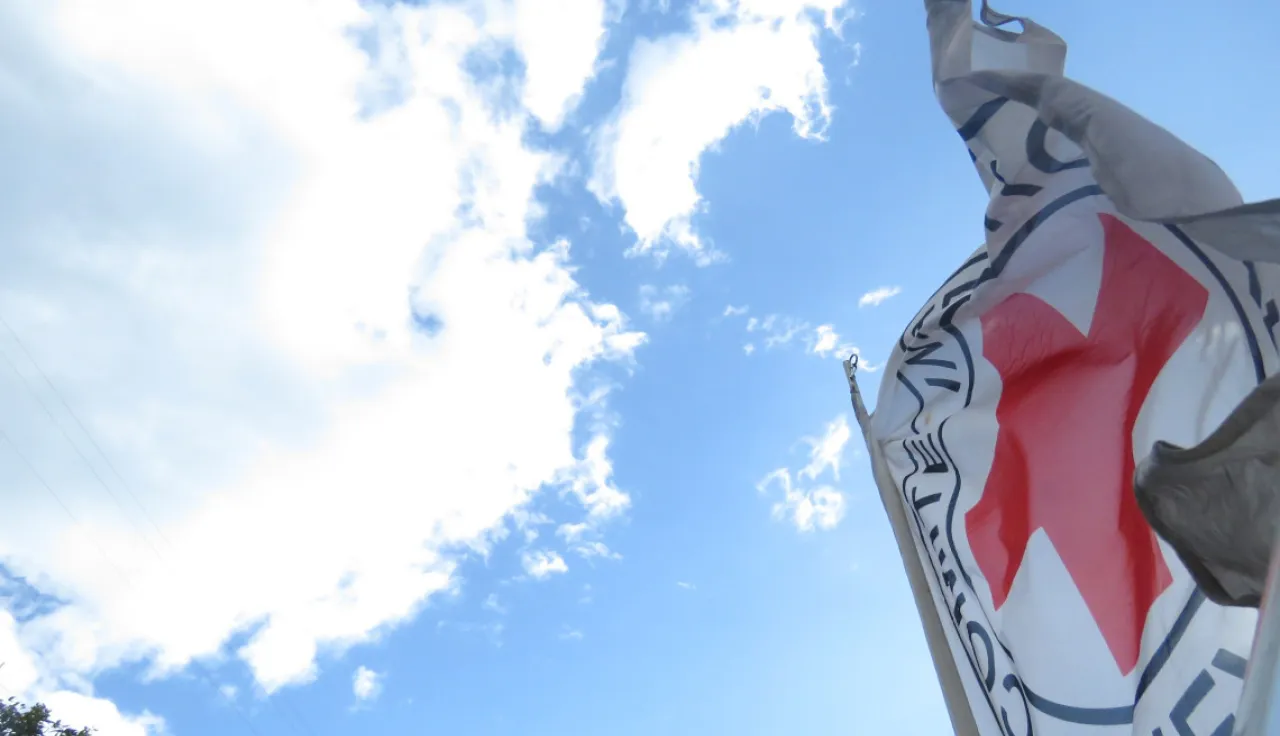
Imagen tomada desde abajo de una bandera del Comité Internacional de la Cruz Roja (CICR), en la que se observa el emblema de la cruz roja. Al fondo se ve un cielo azul parcialmente cubierto por nubes blancas. 

This week marks three years since an unprecedented escalation of violence in Israel and the occupied territories that has seen countless lives shattered, thousands of people killed and injured, and families torn apart.


 By Jun Enriquez

ICRC (October 6, 2026 - Tuesday) - “There are no words that can truly reflect the scale and horror of this human loss,” said Julien Lerisson, ICRC head of delegation for Israel and the occupied territories. “We have seen too much pain over the last three years and we must not lose sight of the humanity we share,” said Lerisson.  

In its role as a neutral intermediary over the last three years, the ICRC supported the return home of 195 hostages from Gaza – including 35 who were deceased. In the same period, across many different operations, we have facilitated the return of more than 6,000 released Palestinian detainees. In Gaza, the ICRC has been addressing humanitarian needs such as access to clean water, adequate shelter and nutritious food, and through the Red Cross Field Hospital, which has provided more than 52,400 consultations.

“Respect for the laws of war ensures space for humanity even during dark moments,” Lerisson said. “We reiterate our call to de-escalate the conflict and provide a path for peace – so that all people affected by the conflict can live safely and in dignity with their loved ones.” (ICRC Press Release; Written and Edited by Jun Enriquez, Digital-Mobile Journalist)

Lebanon: Learning Through Laughter: Helping Children Stay Safe from Unexploded Ordnance


In areas affected by hostilities across Lebanon, the danger does not always end when the fighting subsides. Mines and unexploded ordnance can remain hidden in fields, beneath rubble and near homes, turning familiar places into areas full of potential threats.


 By Jun Enriquez

ICRC (October 1, 2026- Thursday) - In areas affected by hostilities across Lebanon, the danger does not always end when the fighting subsides. Mines and unexploded ordnance can remain hidden in fields, beneath rubble and near homes, turning familiar places into areas full of potential threats. With more than a hundred incidents recorded across the country between April and October 2026, these remnants of conflict put lives at risk, as families return to their homes, children play outside and communities try to rebuild their lives.

Children are particularly vulnerable. An unfamiliar object can easily attract their curiosity without them realizing the danger it may pose.

To help children recognize these risks and know how to react safely, the International Committee of the Red Cross (ICRC), in collaboration with the Lebanese Armed Forces – Lebanon Mine Action Center (LMAC), is bringing life-saving messages to communities through clowning and interactive theatre.

During a series of performances by the group Clown Me In, children are encouraged to remember one simple rule: “If you didn’t drop it, don’t pick it up.” Using storytelling, humour and interaction, the performers turn serious safety guidance into messages children can understand and remember.

“Children learn best when information is presented in a way they can understand and engage with. Through theatre and humour, we can communicate very serious safety messages without frightening them,” said Sabine Choucair from Clown Me In.

The ICRC organized twenty performances in villages in southern Lebanon, the Bekaa, northern Lebanon and Beirut’s suburbs, in coordination with municipalities and local communities.

"The professionalism behind ICRC's initiative is remarkable. It proves that explosive ordnance risk education can be both rigorous and deeply human, and that is exactly the standard our communities deserve,” said Colonel Ali Makki, Head of Explosive Ordonnances Risk Education at LMAC.

The risk can also change with the seasons. As winter approaches, rain and snow can expose or displace mines and unexploded ordnance, causing dangerous items to appear in unexpected areas. This can increase the risk for families and children, particularly during outdoor activities or while collecting firewood, making continued awareness and caution especially important throughout the winter months.

“We want children to leave the show smiling, but also remembering one very serious message: if you see something you don’t recognize, don’t touch it. Move away and call 1706. For the ICRC, helping communities understand these risks is an essential part of our humanitarian response. We remain committed to working alongside our partners to help people stay safe and reduce the risks posed by mines and unexploded ordnance, particularly in areas affected by hostilities,” said Jessica Ibrahim, weapon contamination field manager at the ICRC’s delegation in Lebanon. 

For communities living with the consequences of hostilities, knowing how to recognize danger and respond safely can help prevent further injuries and save lives. (ICRC Lebanon Press Release; Written and Edited by Jun Enriquez, Digital Mobile Journalist)

West Bank: ICRC calls for urgent protection of civilian population

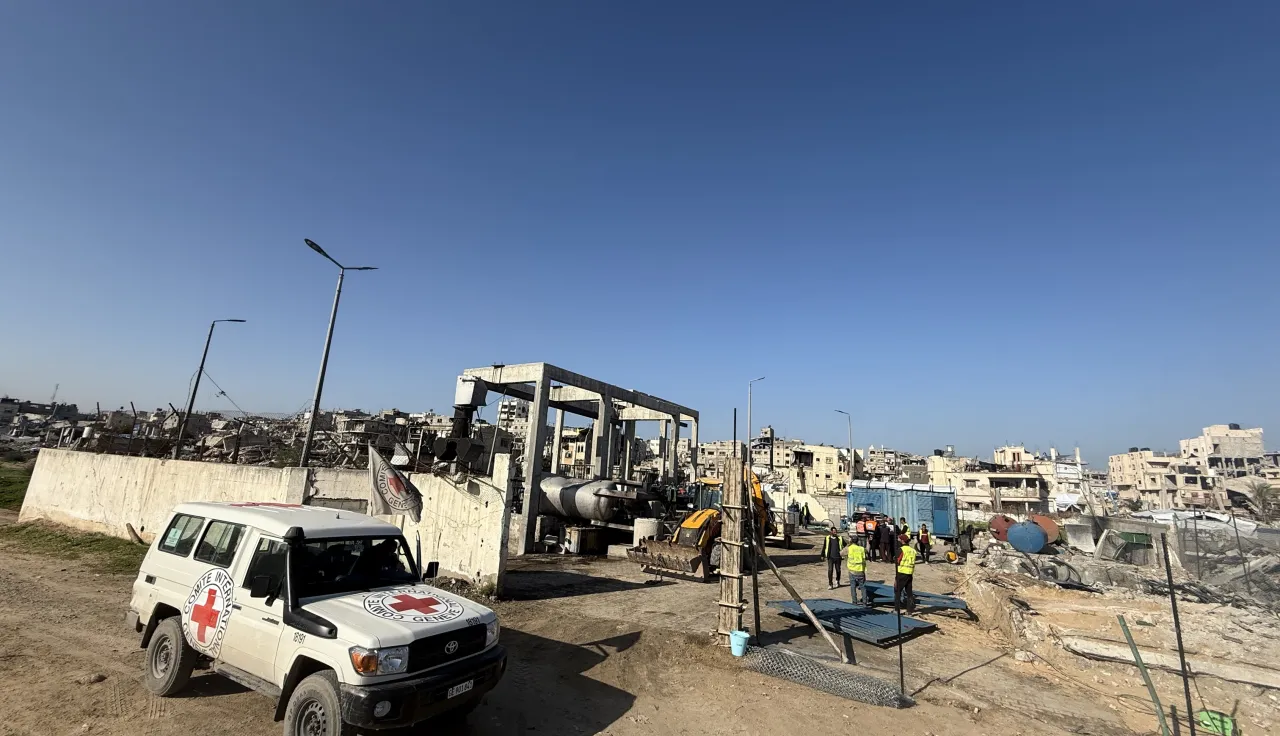
 Damaged during the conflict, the Al-Wafiya Pumping Station is a critical part of Khan Younis’s sanitation network.

Jerusalem / Tel Aviv – Surging violence, increasing restrictions on movement and an acceleration of settlement expansion are causing serious harm to civilians across the West Bank, making everyday life untenable for the civilian population.


  By Jun Enriquez

ICRC (September 29, 2026 - Tuesday) - This year alone, dozens of Palestinians have been killed, hundreds injured and many more displaced. Homes and property have been damaged or destroyed, leaving many without shelter or livelihoods.

“The frequent and severe violence must be brought to an end,” said Julien Lerisson, the head of the ICRC’s delegation for Israel and the occupied territories.

“Authorities have a responsibility to protect the population from violence, including when that violence is inflicted by settlers. What international humanitarian law says on the protection of private and public property, and on the population’s access to essential services, must be respected,” he said.

The humanitarian impact of the violence, including the tragic loss of life and serious injuries, is overwhelming. Movement restrictions mean that patients are unable to reach health care, children are unable to get to school, people are cut off from their homes and livelihoods, and families and whole communities face increasingly intolerable conditions in which to live.

Ambulances are sometimes held up for hours at checkpoints and roadblocks, or forced to add hours to their routes to avoid road closures and violence. All of this makes the work of first responders harder and endangers the lives of those they seek to help.

Israel has a right to take measures to ensure its own security. However, as the occupying power in the West Bank it also has a responsibility towards Palestinians, who are protected persons under international humanitarian law. The occupying power has an obligation to treat protected persons humanely at all times, protect them against all acts of violence or threats thereof, and must make every effort to restore and maintain public order and civil life.

“Upholding international humanitarian law and respecting obligations under the law of occupation are necessary steps towards restoring the safety and dignity of the population. This means protecting civilians from violence and ceasing the expansion of civilian settlements,” Lerisson said. (ICRC Press Release;Written and Edited by Jun Enriquez, Digital-Mobile Journalist)

Popular Posts